News
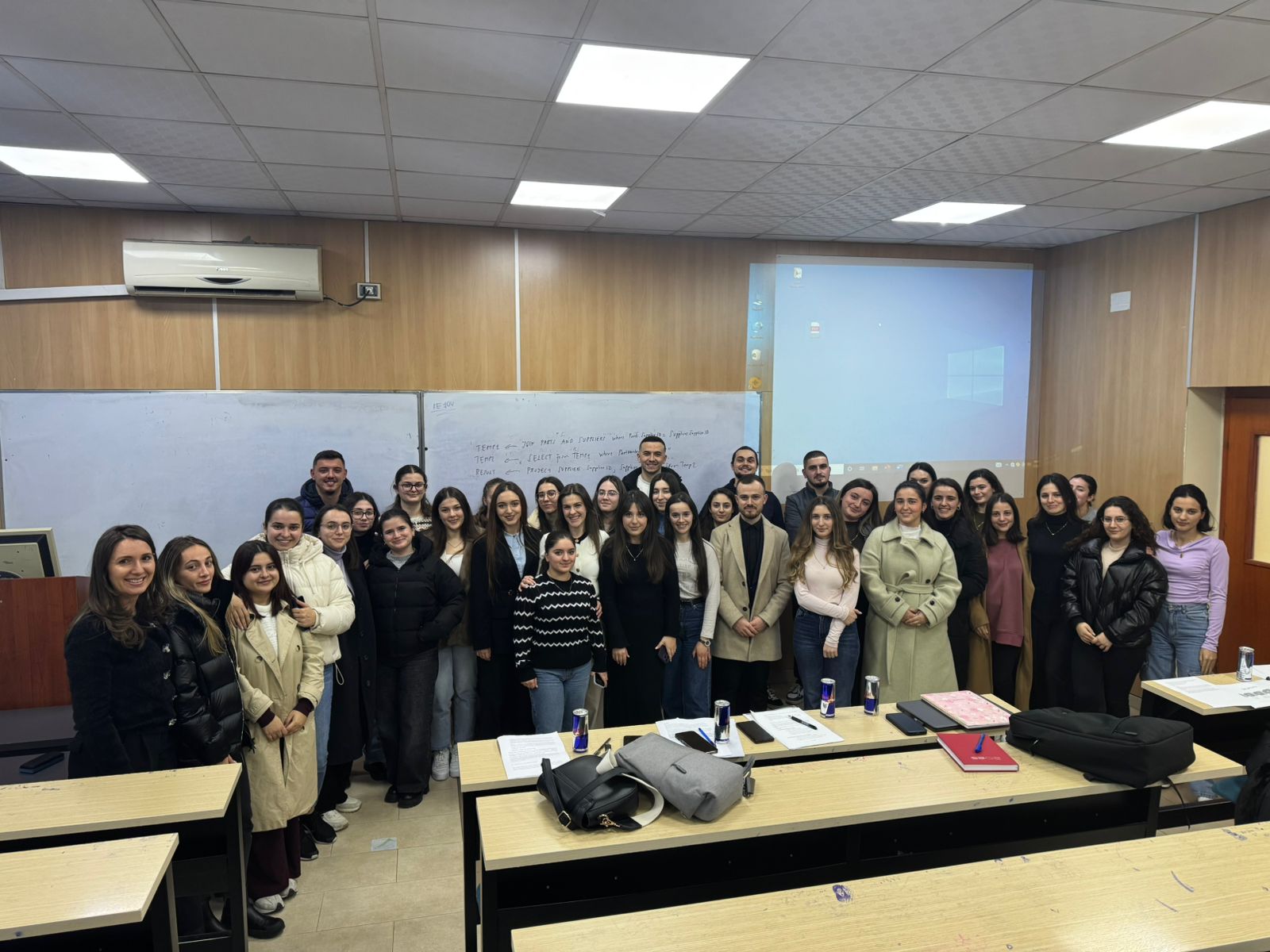
The Faculty of Economics, University of Tirana, completed eight extracurricular courses for students within the Erasmus+ DERHE project. Delivered during 2024–2026, the courses complemented regular university studies with practical learning in project planning, Lean Management, operations management, Artificial Intelligence and Cybersecurity.
The programme connected academic concepts with professional tasks through exercises, case studies, group work and interactive activities. Courses were delivered by FEUT academic staff, with contributions from European partner expertise.
Developing Management and Digital Skills
Courses in Project Planning and Scheduling introduced students to organising activities, sequencing tasks and developing project schedules. Practical exercises helped them explore how planning tools can support the coordination of time and resources.
Facility Layout and Operations Management addressed the organisation of production and operational processes. Students cons... >> More info
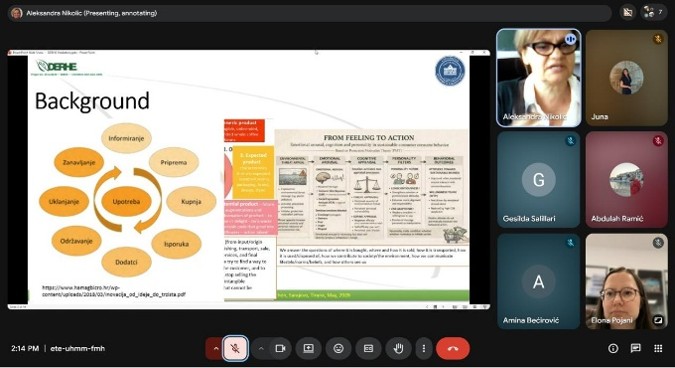
The University of Sarajevo, in cooperation with the Faculty of Economics, University of Tirana, organised an International Hackathon in May 2026 as part of the Erasmus+ DERHE project. The activity was held online and brought together students from both universities to address a practical business challenge for Mlin Ustikolina.
The Faculty of Economics students collaborated with students from the University of Sarajevo to develop proposals integrating sustainability, digital transformation and business planning. Their work included developing a strategic framework for the company.
Students had the opportunity to apply their academic knowledge to a real business case, exchange perspectives and present their proposals for discussion and feedback. The process was supported by cooperation between academic staff from both universities, connecting learning with applied research and business needs.
This activity illustrates DERHE’s contribution to creating opportunities for international st... >> More info
PMP Jelšingrad Gradiška is currently in the phase of implementing the Lean concept (lean manufacturing), with the aim of eliminating waste across the entire business system, i.e., in all business processes. One of the key objectives is to reduce waste in the tool changeover process.
Through conducted analyses, it has been determined that a significant amount of time is spent on changing the tool for second tool and its clamping to fixtures on the welding robot.
Within this task, a process recording (time study) was carried out on December 11, 2025, at PMP Jelšingrad, at the Robot 3 workstation. At this workstation, it is necessary to manually change workpieces, as well as fixtures/tools depending on the type of parts being welded. The process is performed by operators, where one operator is responsible for three robots per shift, with additional support from another operator when required.
During the recording, all activities were monitored and the time required for each step... >> More info
The task focuses on designing and implementing a web application that enables users to easily order cakes from local producers. The platform aims to digitally connect end customers with small-scale cake manufacturers by providing access to product listings, prices, and contact information. Users will be able to browse available offers, select a producer based on their preferences, and place orders online, while producers will have individual profiles to showcase their products and improve their market visibility. The objective is to support the digitalization of small local businesses and facilitate a simple, efficient, and user-friendly online ordering process. >> More info
The company aims to develop an IoT system which enables the collection, storage and visualization of measurement data in real time. The measurements are related to various indicators of soil, air and watter that are of interest in the fields of agriculture and ecology. The system consists of a hardware devices, sensors, and a software platform for data storage and management. The potential applicant is required to explore key IoT technologies, hardware and software components required for implementation of the systems, and as a result to develop a functional prototype of the system. >> More info