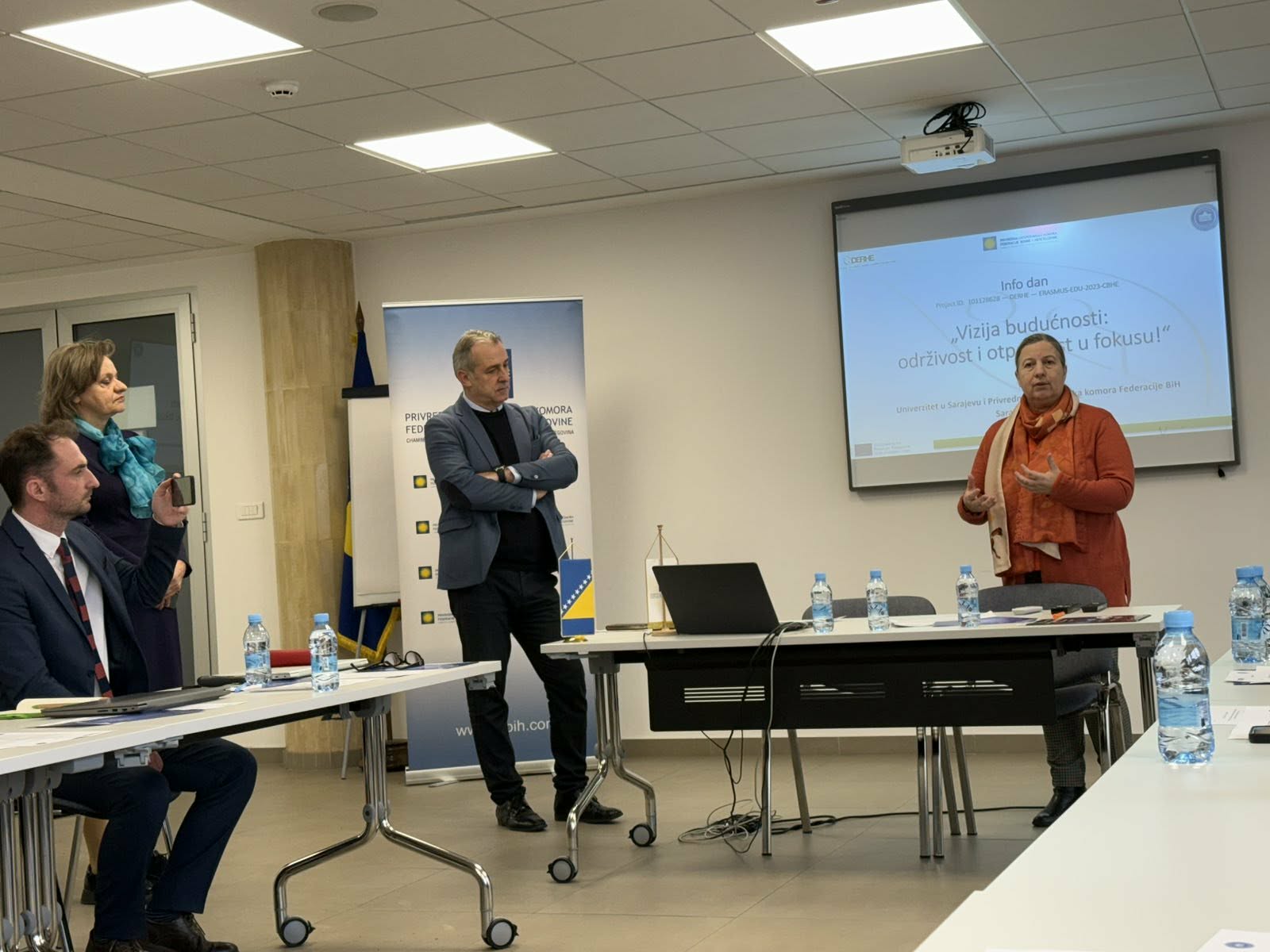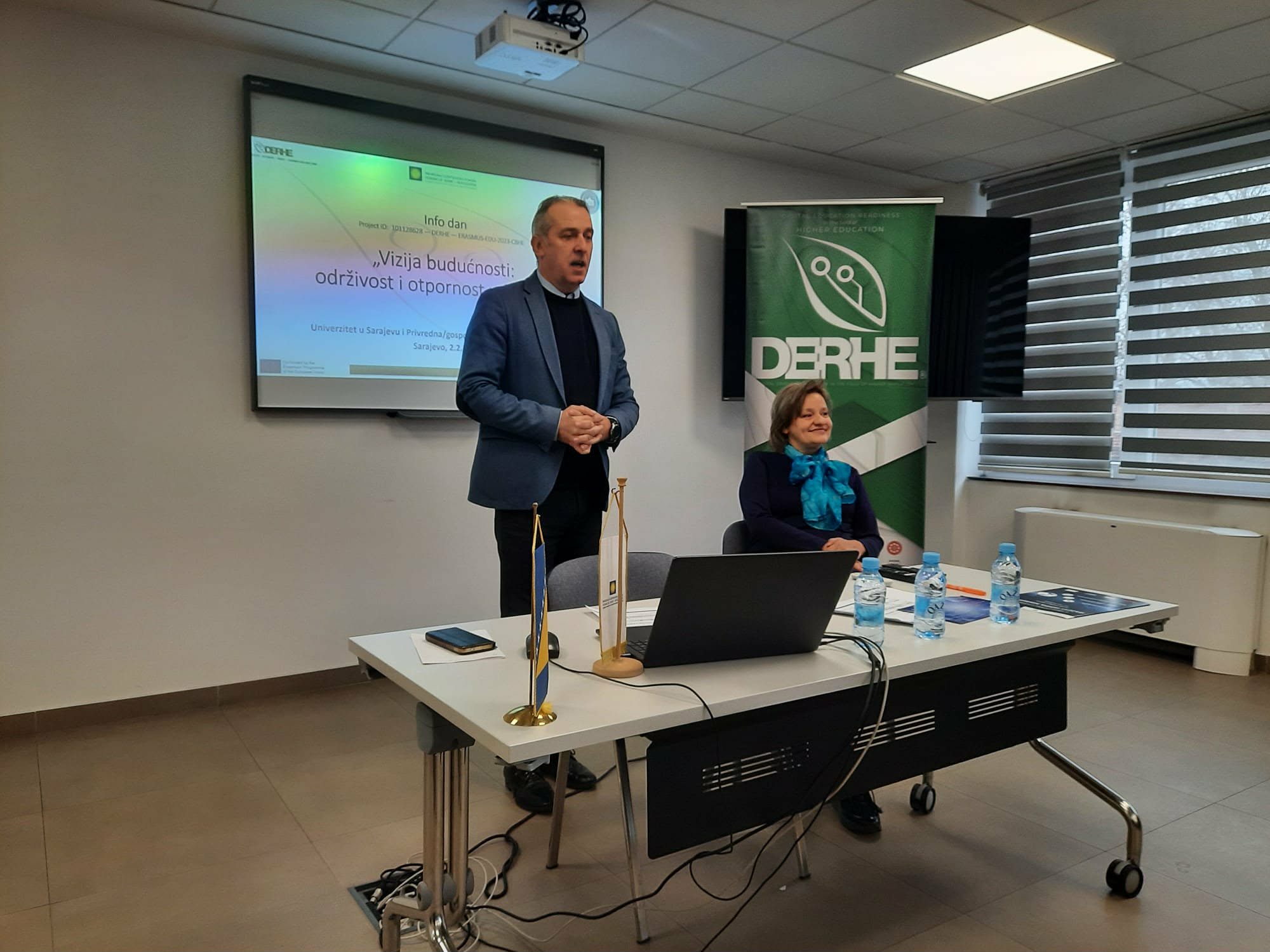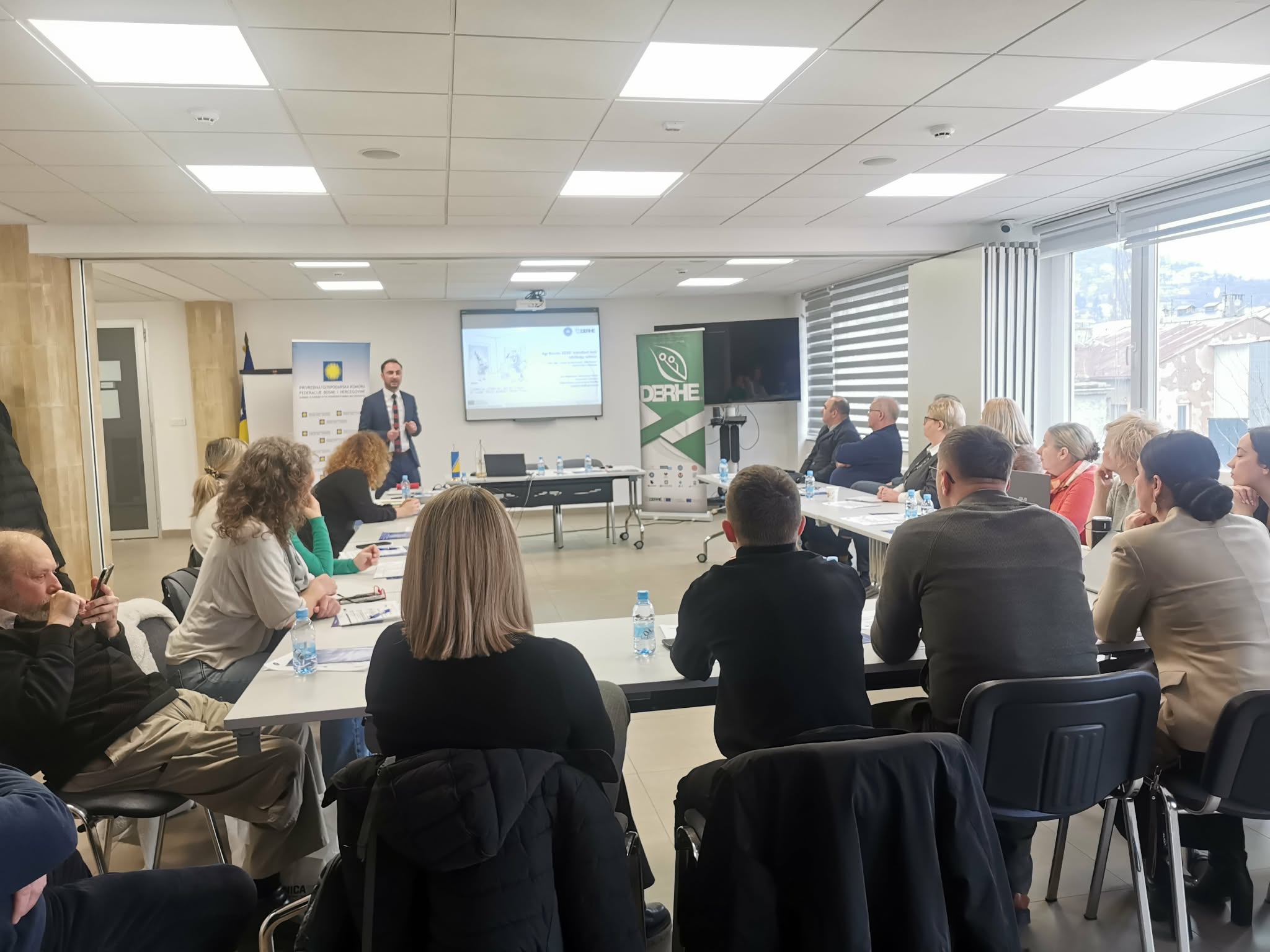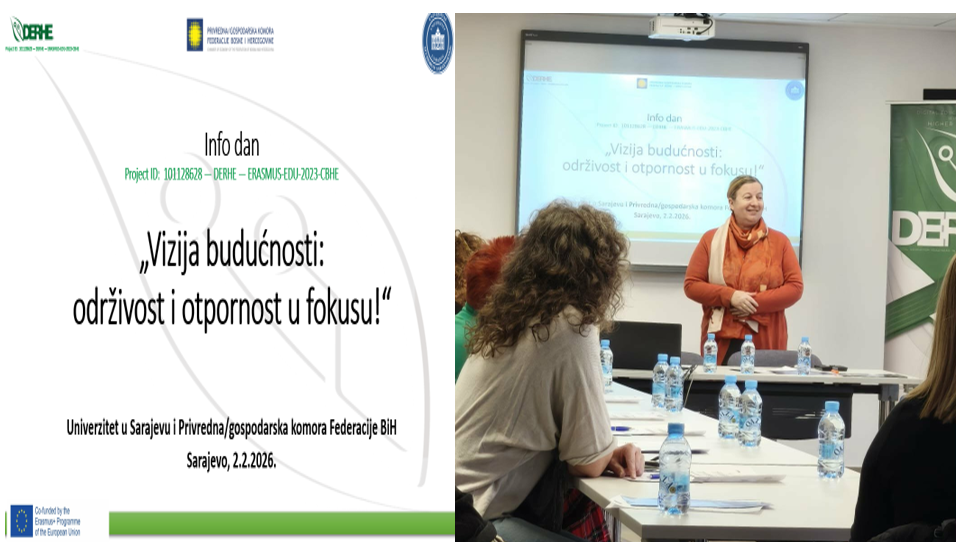
Minister prof. Dr. Dušanka Bošković (Ministry of Science, Higher Education and Youth, KS) opened the #DERHE info day with an address titled "Vision of the future: sustainability and resilience in focus" held on February 2, 2026. and organised by the Chamber of Commerce of FBiH and UNSA, Faculty of Agriculture and Food, Sarajevo. Minister Bošković highlighted that modern technology allows us to address individual challenges and create tailored solutions, enhancing system agility and involving all participants. She stressed the need to strengthen digital and green capabilities/skills in ways that shift our thinking, change the mindset about development, and benefit society as a whole. This was the central theme of the info day and the project #DERHE - Digital Education Readiness in Higher Education, no. 101128628; ERASMUS-EDU-2023-CBHE.
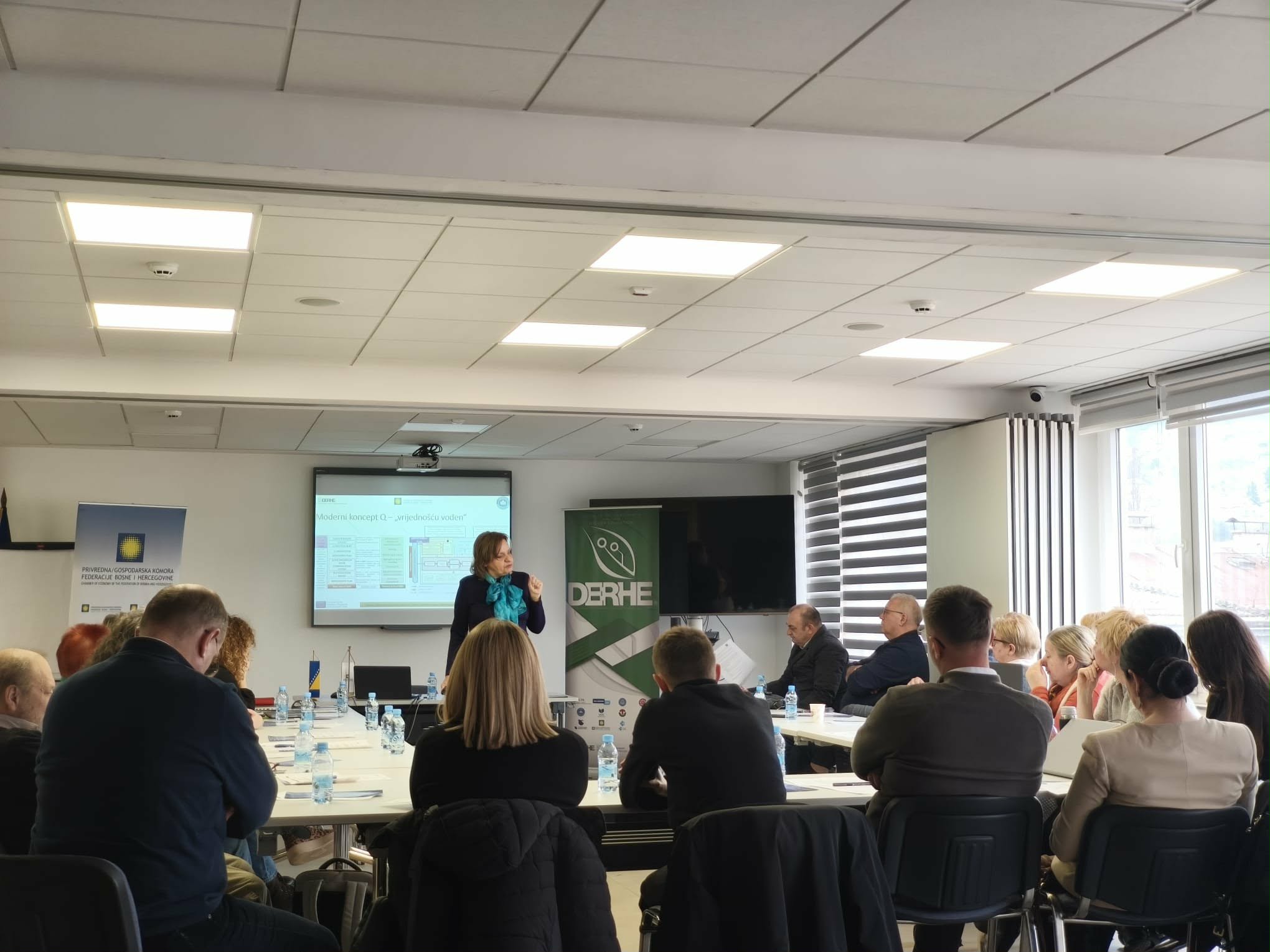
During the info day, we discussed the negative impact of the current approach to business and the use of modern technologies, as well as the negative impact of how we live, how we eat, and, especially, how we choose, use, and waste food. According to the UNDP, 15.4% of human development in Bosnia and Herzegovina (BiH)—a measure of quality of life that encompasses individual health and well-being—is lost due to excessive CO2 emissions and unsustainable resource consumption (UNDP, 2025). The modern concept of quality, that raise value for all actors, promoting monitoring, self-assessment, and continuous improvement across all aspects of business, is the „hidden gem“ of needed transformation. This framework is partially or fully implemented across the food system, indicating the transformation has begun but is not yet fully recognised. This framework should be used to create a platform for innovative solutions and incentives that reduce environmental pressure and enhance the quality of life. To drive these changes, it is crucial to strengthen students' and future decision-makers' green and digital skills. This initiative is the focus of the complementary EMPHASIS (Empowering Higher Education through Access to Cooperation for Sustainable Practices and Energy Efficiency; ERASMUS+) project, as discussed during our meeting.
Several obstacles impede the implementation of business models focused on reducing negative pressure on the Planet. One important obstacle is the lack of reliable methods to monitor/record and verify the actual pressure reduction achieved through specific production models (e.g., carbon farming). The solution is offered by a very sophisticated and comprehensive platform developed within the framework of the NGO project CENER 21 - Accelerating the development of the carbon market for mitigating and adapting to climate change in Mediterranean agriculture". This platform will enable BiH farmers to participate in the carbon credit market and secure additional investment, improving lives in rural areas and across BiH.
Before the discussion, the organizers scheduled four presentations to highlight the joint activities of the Chamber of Commerce of the Federation of Bosnia and Herzegovina and the UNSA Faculty of Agriculture and Food in Sarajevo.
The introductory lecture by Prof. Dr. Alen Mujčinović, titled "Agribusiness 2030: Trends That Shape the Sector," aims to highlight the complexity of agribusiness, the numerous stakeholders involved, and the interactions that influence the sector. It emphasizes the need to change business approaches. The lecture focuses on three key dimensions (trends) where challenges and efforts from the academic community, industry, consumers, and other stakeholders are most apparent. These dimensions include: (i) the sector's limited capacity to adopt new technologies; (ii) the sustainability of the food system; (iii) the ongoing changes in consumer habits in response to social, economic, and environmental challenges.
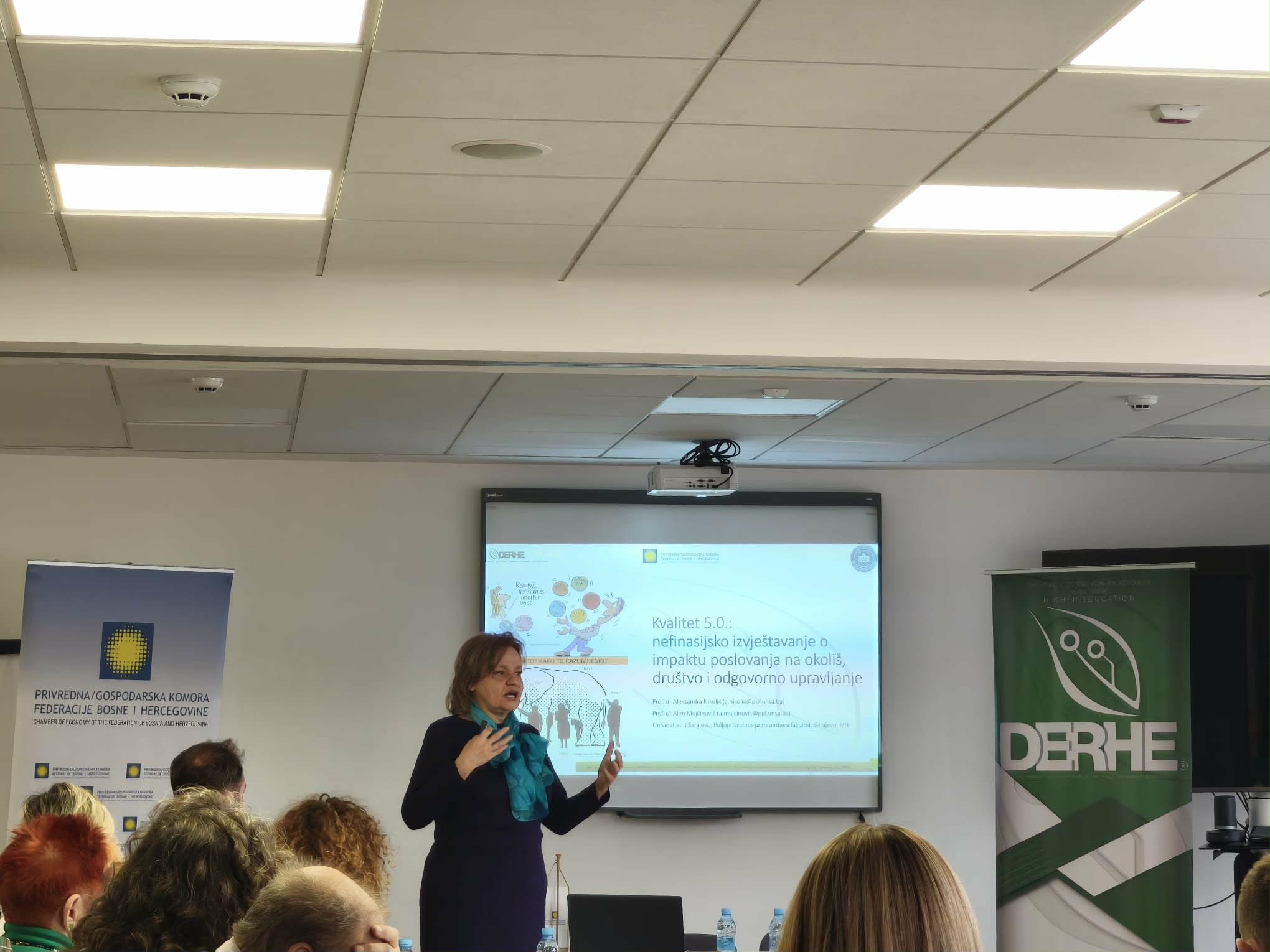
In her presentation, "Quality 5.0: Non-Financial Reporting on the Impact of Business on the Environment, Society, and Responsible Management," Prof. Dr. Aleksandra Nikolić made it clear that most companies equipped with modern quality systems are fully prepared to evaluate, monitor, and report on a wide range of impacts—both positive and negative. Usually, this company's capabilities are not recognised or leveraged by its management as tools to build sustainable competitive advantages. Therefore, quality (and safety) management systems are undeniable “hidden gems” of companies’ capacity to transform and adapt to an ever-changing environment. Quality is the ability to deliver value and benefits for all (company, society & environment) across all business processes throughout the product life cycle, and it is shaped by our ability to change how we do business. She asserted that the values/benefits (quality and safety) generated through business processes are fundamentally rooted in positive contributions and the active reduction of negative effects on the environment, society, and individuals alike. Quality 5.0 is essential to building a resilient, sustainable food system and should be embraced as a strategic imperative.
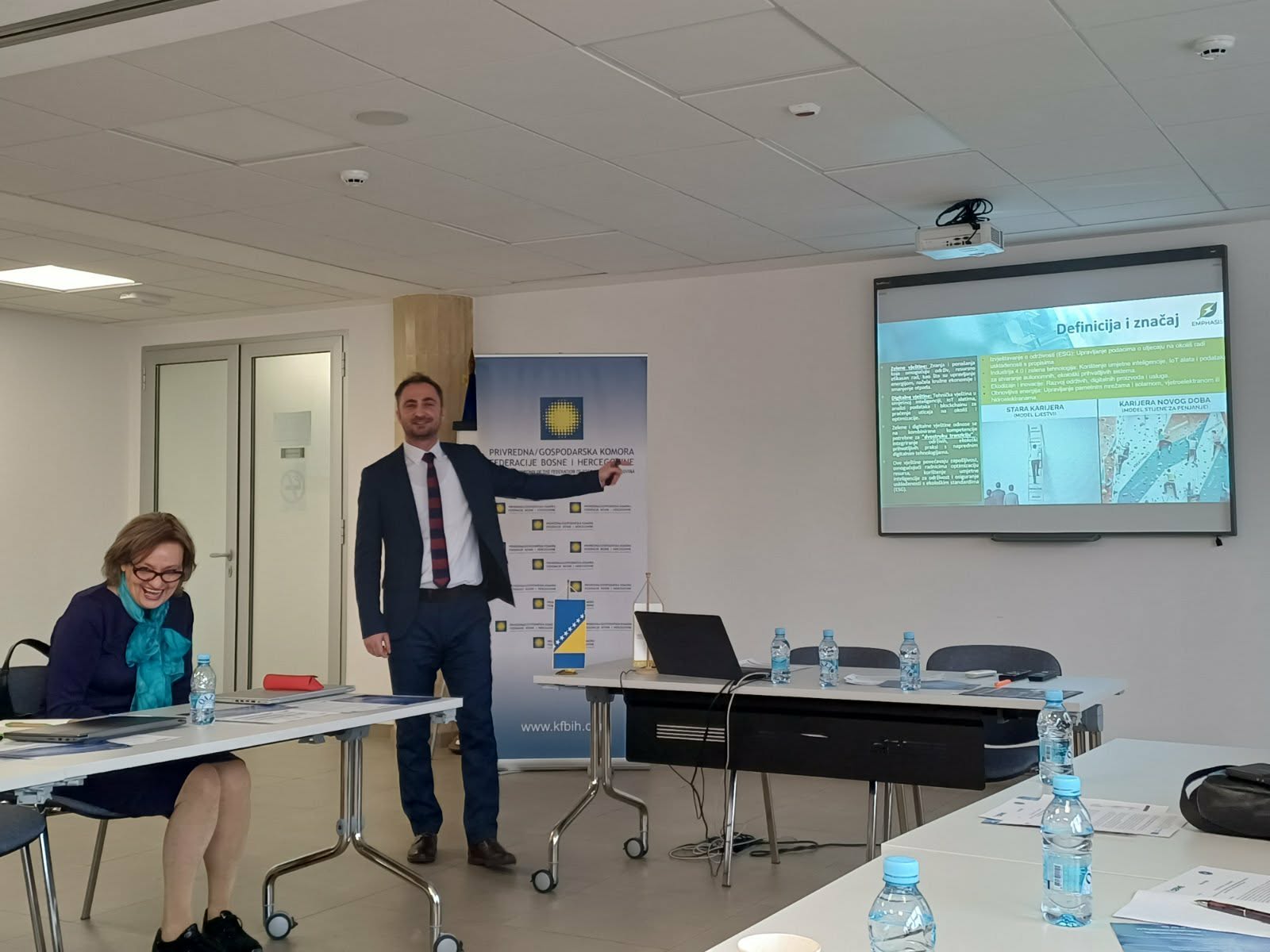
This was followed by a prof. dr Alen Mujčinović presentation of the experiences of the Erasmus + project Empowering HE through access to cooperation for Sustainable Practices and Energy Efficiency for all entitled "EMPHASIS: shaping the future through green and digital skills", where the participants were presented with the necessity of building green and digital skills necessary for the "double transition" - integrating sustainable, environmentally friendly practices with advanced digital technologies. These skills enhance employability, enabling workers to optimize resources, leverage artificial intelligence for sustainability, ensure compliance with environmental standards, and drive eco-design and innovation. The participants were presented with proposals for modules that the project team is developing to strengthen the aforementioned skills. The modules will be available to all interested parties through the project's official platform.
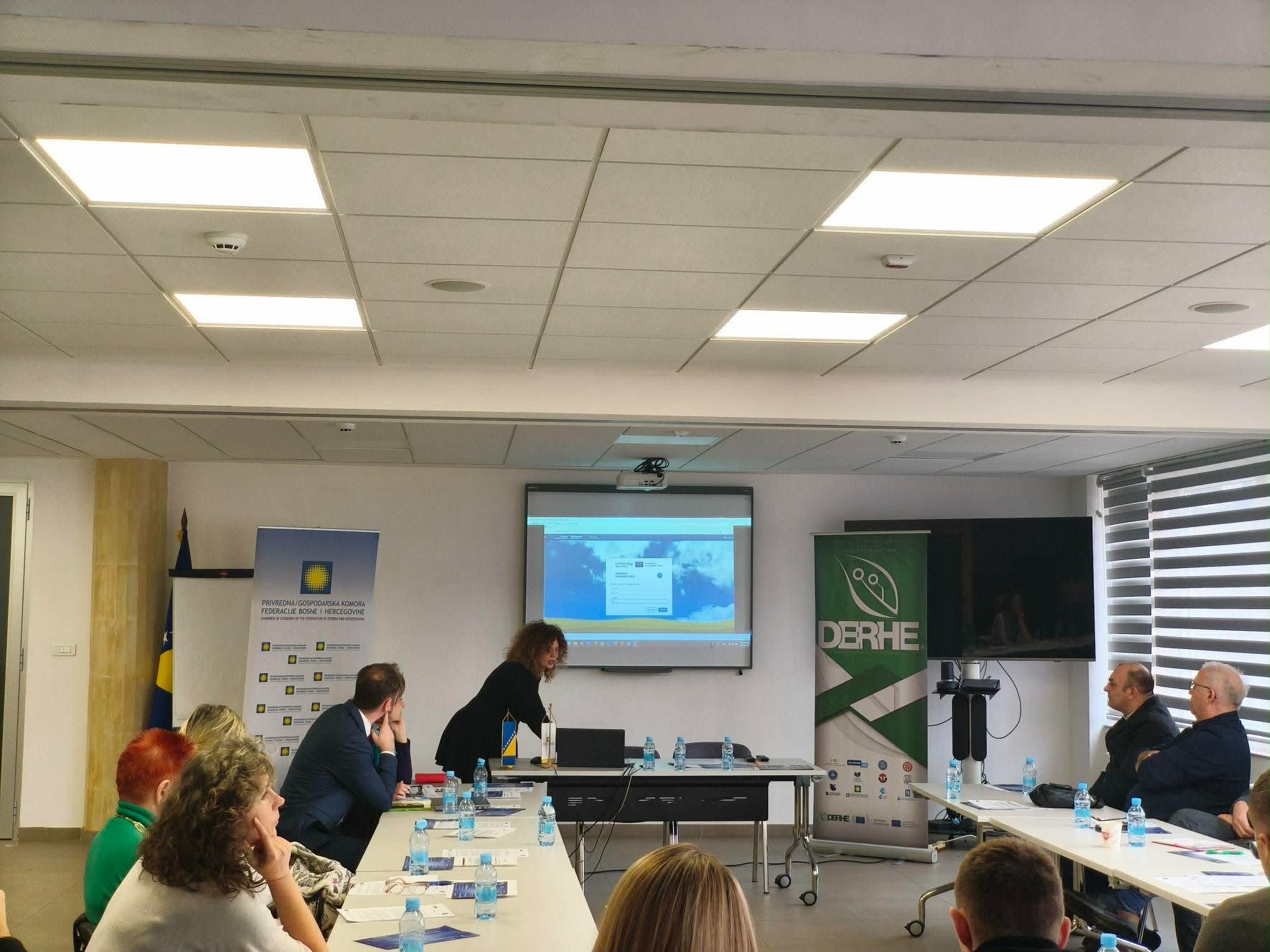
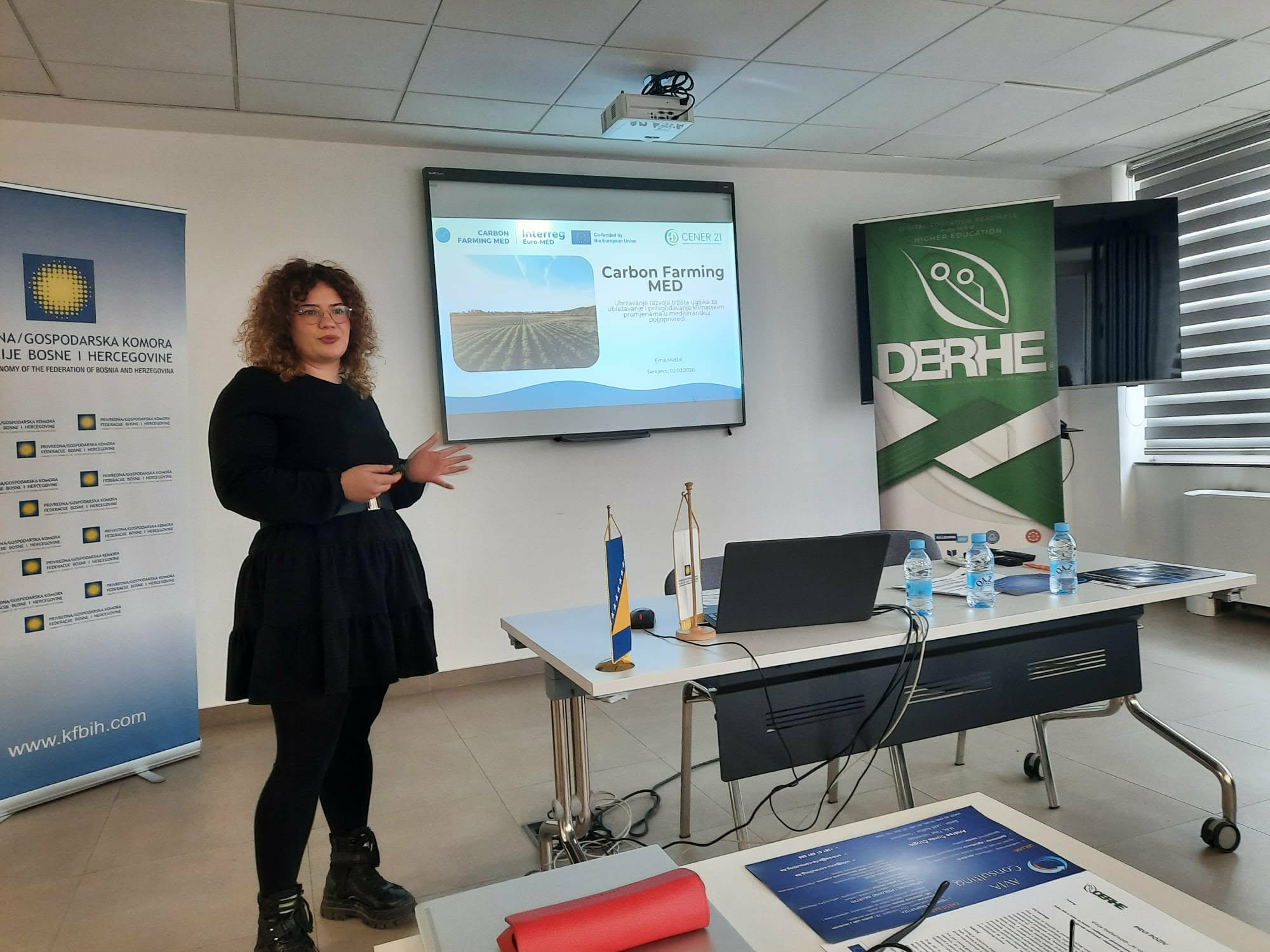
Finally, the presentation "Accelerating the development of the carbon market for mitigating and adapting to climate change in Mediterranean agriculture", prepared by Ema Midžić from the NGO CENER 21, presented how we can join the "carbon credit market", that is, how agricultural producers and other actors can provide financial resources for business projects that reduce the emission of carbon equivalents. A comprehensive, easy-to-use, and highly designed carbon farmer platform is presented, which should help farmers verify GHG emission reductions on each farm.
Photo gallery available at https://derhe.si/galleries/display/6 .
 Infoday