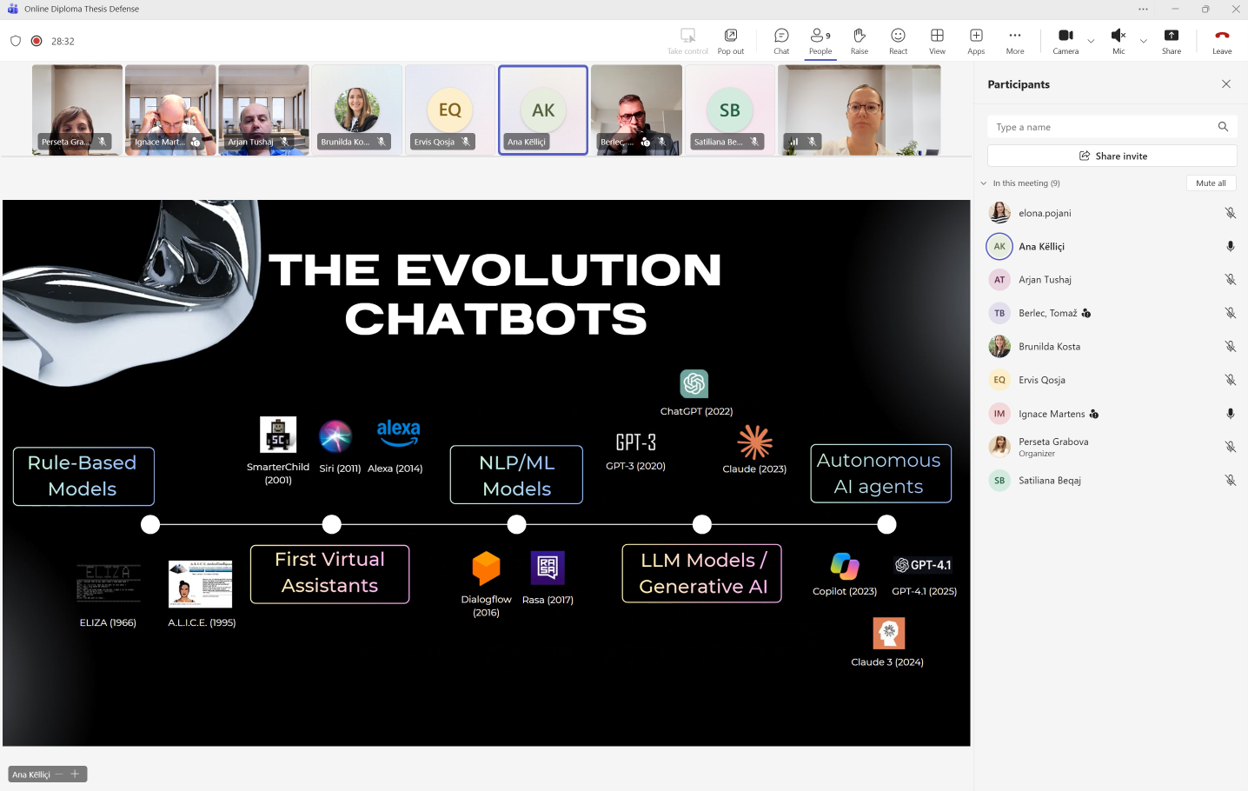
The Faculty of Economics, University of Tirana (FEUT), connected student research with practical business challenges through international thesis co-mentoring within the Erasmus+ DERHE project. Working with academic supervisors at FEUT and co-mentors from KU Leuven and the University of Ljubljana, students developed research combining academic methods with questions relevant to organisations in Albania.
The initiative supported eleven bachelor’s and master’s theses completed in 2026, covering areas including circular economy, production processes, digitalisation, financial reporting and risk management.
International co-mentoring complemented the guidance provided by FEUT supervisors. Through online consultations, written feedback and discussions of research findings, students received support in refining their research questions, selecting methods and developing recommendations. The process also encouraged them to explain the practical significance of their findings and distinguish research evidence from proposed improvements.
Research Addressing Practical Organisational Needs
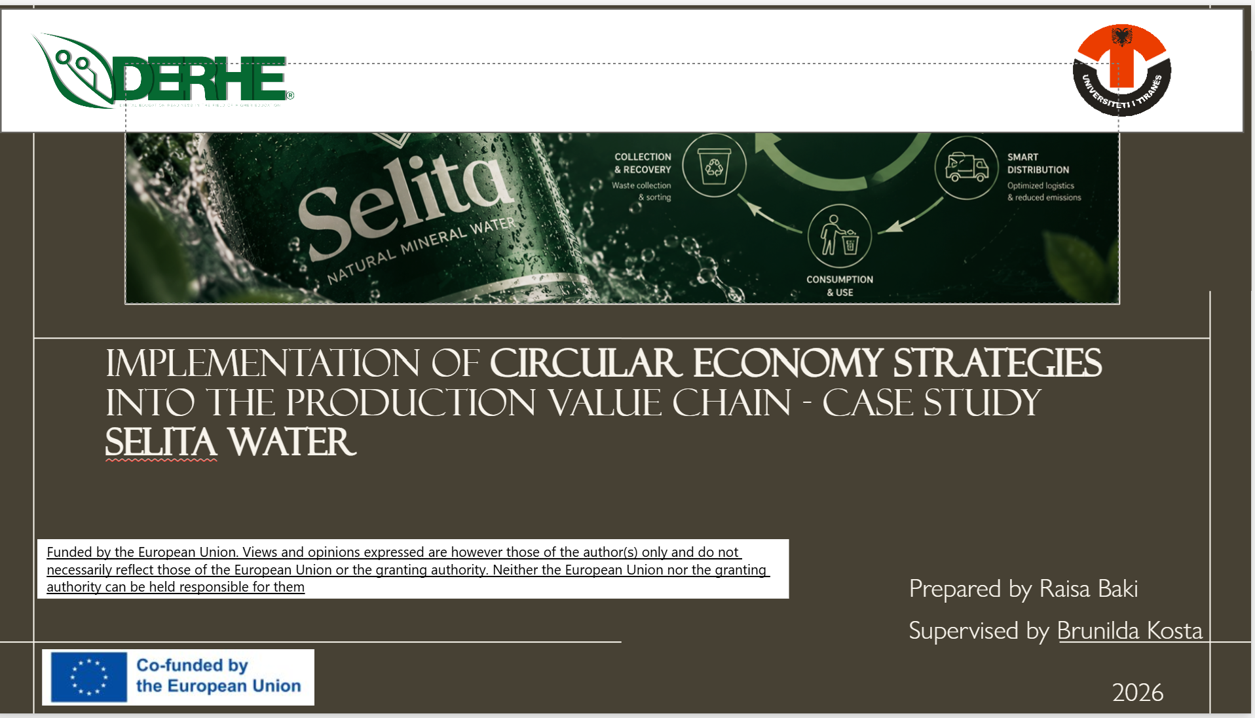
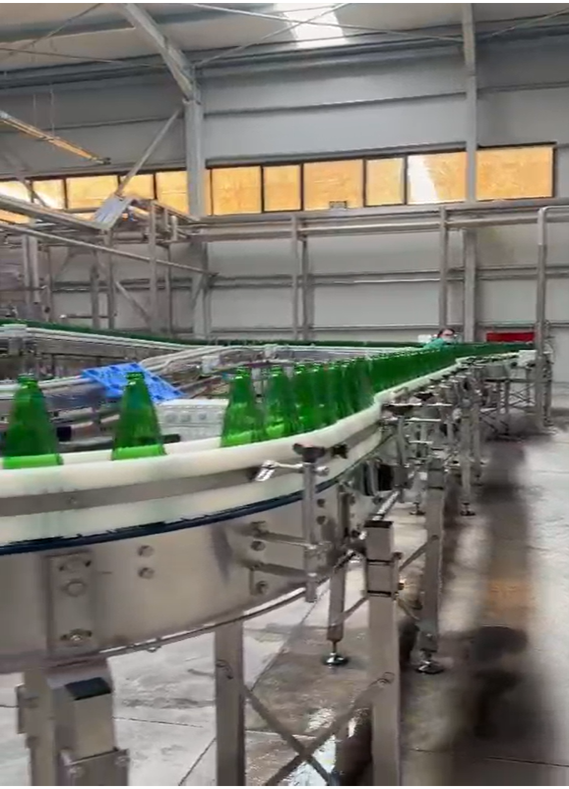
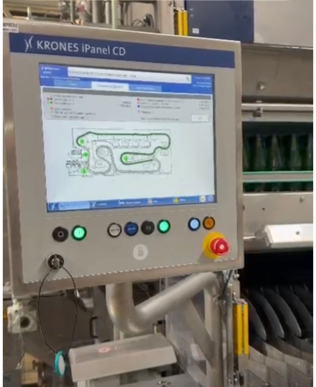
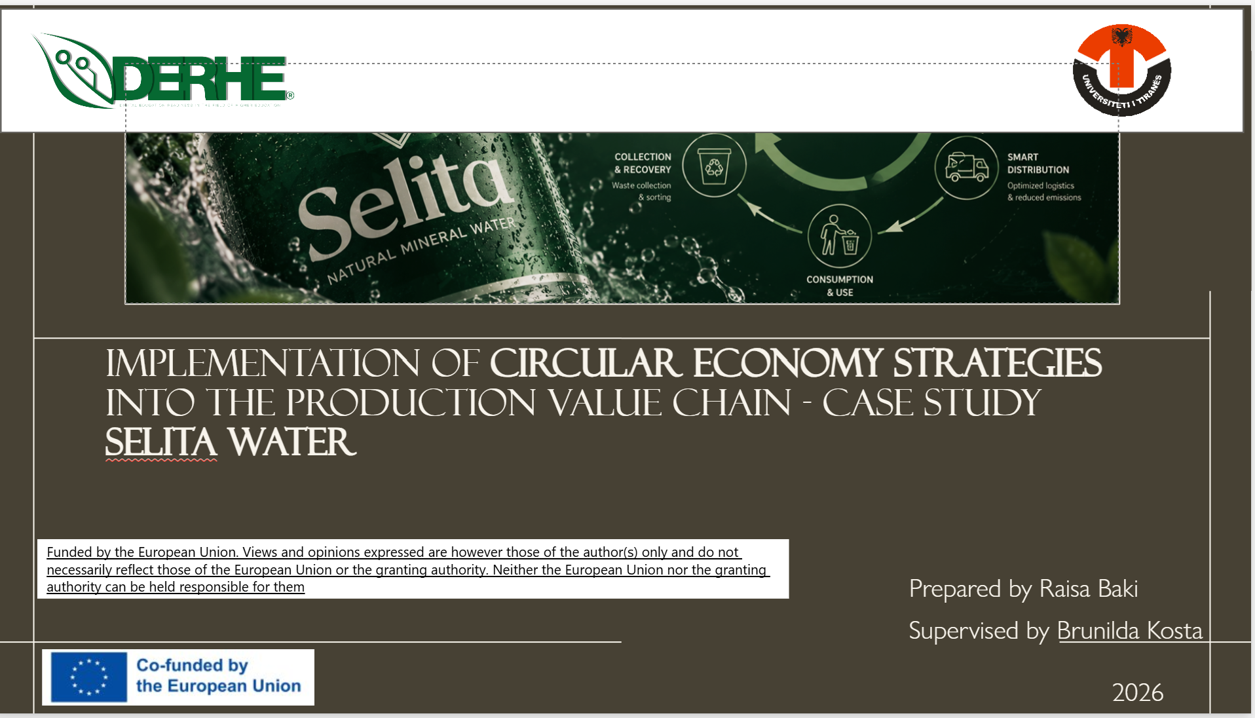
At Selita Water, a thesis examined opportunities to integrate circular economy principles into the company’s production value chain. Drawing on a site visit, an interview with the production manager and international benchmarking, the research identified opportunities concerning lighter bottles, recycled materials, recyclable labels and reusable packaging. The resulting recommendations outlined a possible pathway towards more circular operations.
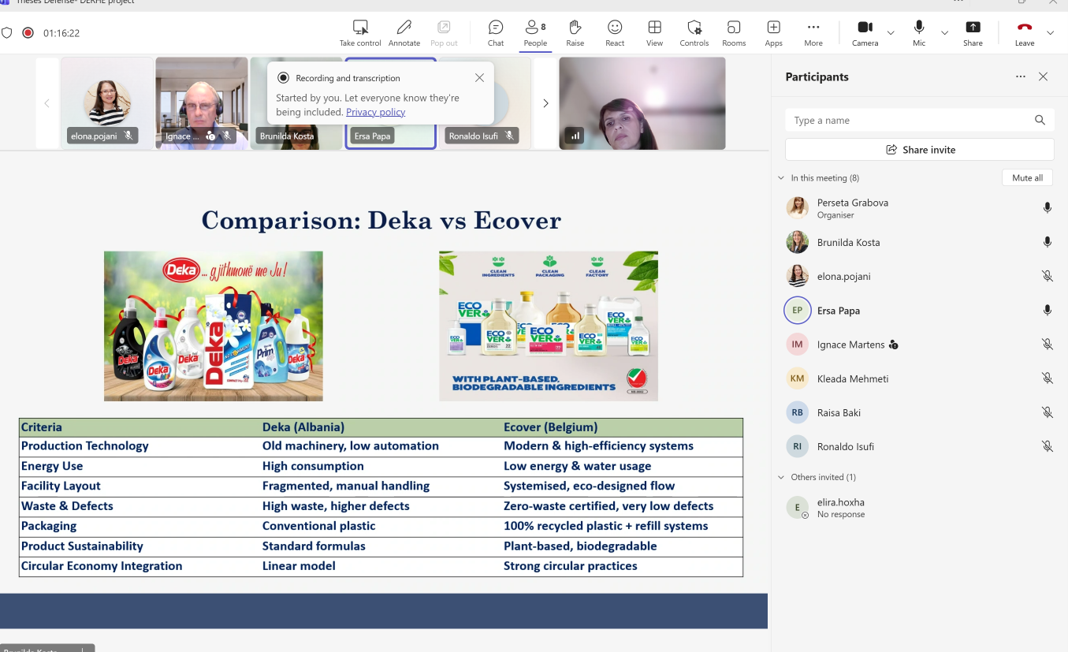
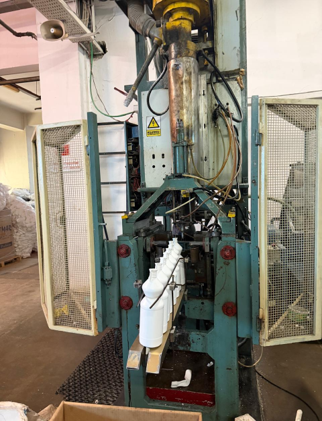
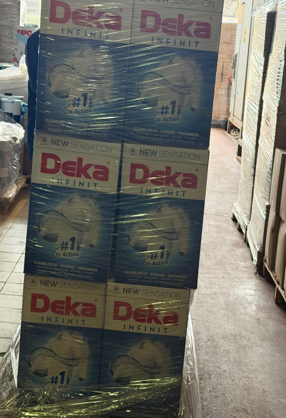
Research involving DEKA, an Albanian detergent manufacturer, focused on redesigning production processes. The study analysed the liquid detergent production line and identified issues related to equipment, material movement, filling and packaging. It developed proposals for improving production flow, strengthening process monitoring and introducing circular economy practices, including more sustainable packaging and resource use.
Another thesis explored digitalisation in accounting and financial reporting, combining a professional survey with a company case study of ERP use. The research examined how integrated digital systems can support more accurate and timely reporting, while identifying staff training, implementation costs and data security as important considerations. Its recommendations addressed both technology adoption and the organisational changes needed to support it.
Connecting Academic Quality with Practical Relevance
Across these studies, international feedback encouraged stronger links between research questions, collected data and conclusions. Co-mentors also highlighted opportunities for further analysis, including financial feasibility assessments and the use of additional operational evidence.
Through this experience, DERHE strengthened cooperation between FEUT and European academic partners while giving students opportunities to investigate real organisational problems. The completed theses provide research findings and proposals that can inform further discussion with companies and institutions, alongside future student projects and applied research.
Attachments